Monday, 13 July 2020

1901 - Hamilton Day at the Pan American Exposition


As part of the strategy to boost attendance at the 1901 Pan American Games, the organizers targeted individual states by establishing a day named after particular states, while also working with the railways, main newspapers in those states. Special ceremonies and speeches by representatives the state honored that day would take place.
In August, 1901, the officials of the Pan Am Exposition received a request for a particular day to be set aside not for a state but for a city. The request came from Hamilton, Ontario, Canada.
The request was granted. As there were few open days left, it was decided that August 20, 1901 would be a day at the Pan Am which would be both Louisiana Day and Hamilton Day.
After permission was received for Hamilton to be the first city to be granted a day at the Pan-American Games, efforts were undertaken to make sure than a goodly number of Hamilton residents would attend on that particular day. Both the Toronto, Hamilton and Buffalo Railway and the Grand Trunk Railway put special trains on to only carry the Pan American Exposition and return them all.
So on August 20, visitors to the exposition in Buffalo would see celebrations for Louisiana in the morning, and for Hamilton in the afternoon.
The Times account of Hamilton Day at the Pan Am Exposition began by noting the intermingling of Hamilton and Louisiana and how that worked out : “
Yesterday was a big day at the Pan-American Exposition at Buffalo. It was both Louisiana Day and Hamilton Day. The French state of the South had the forenoon and this city had the afternoon. Hamilton was represented by over 3,000 persons, and these were by no means lost in the 71,000 odd sightseers from other parts of Americas. As a matter of fact the manufacturing city of Canada cut as great a dash, of not greater, than all the rest of America. The members of the Hamilton delegation made themselves known by various means.”1
1 “They Got Off at Buffalo : Over 3,000 Hamiltonians at the Big Fair : Ceremony in the Temple : Excellent Railway Service”
Hamilton Times.   August 22, 1901.
The official delegation from Hamilton was greeted by senior Pan Am Exposition officials on arrival :
“When the T.H. & B. special bearing the civic party arrived at the exposition grounds station, it was met by Mr. Grant Henderson, special commissioner to Canada. He welcomed the party and led the way to the Canadian building.
“A procession was formed, headed by the 13th Regiment Band, which played Hughes’ new march, ‘King Edward VII,’ and walked to the Canadian building. The civic deputation \, which composed of Mayor Hendrie, Ald. Walker, Birrell, Kerr, Fraser, Thompson, Waddell, Dunlop and Wallace, was welcomed by Mr. William  Hutchison, Canadian commissioner, and Mr. W.A. Burns,  Secretary of the commission. The crowd which followed the band looked through the building and admired the exhibits. The band played two stirring selections for the large gathering. The aldermen then took the band to the press building where two pieces were played for the edification of the staff. Mr. S.W. Bolles, that good fellow, ordered out the Union Jack, and it hung in front of the building for the rest of the day”1
At the 2 p.m. time scheduled for Hamiltonians to attend a special celebration of the city at the huge Temple of Music building, there was a minor delay:
 “The ceremony in connection with Louisiana State was not over at that hour, but the Hamiltonians flocked in – and heard a Canadian speaking. He was Mr. H. Saint-Pierre, a Montreal lawyer, who had been asked to take the place of Hon. J. Tarte, who couldn’t be present. At the close of his speech, Governor Heard declared the meeting adjourned, and the Hamilton party were in charge. Hundreds of Southerners remained for the ceremony.”1
When it was time for the Hamilton Ceremony to begin, almost every Hamiltonian who took one of the trains to Buffalo was present in the Temple of Music :
“Ald. Frank E. Walker, Honorary Commissioner to the Exposition, presided, and with him on the platform were Hamilton aldermen; Mr. J.G. Melbourne, President, and Mr. Geo. Urban, Director, of the Pan-American; Mr. John A. Kennedy, representing the Canadian Club of Buffalo; Mr. Newman L. Steiner, Honorary Commisioner for Ontario.
“Ald. Walker introduced Mr. W.I. Buchanan, Director- General of the Exposition, and he gave the visitors a hearty welcome. He said Hamilton, Ont. was the first city on the continent to have a day set apart for it. The directors appreciated the support given by the people of the Ambitious City.
“Mr. Grant Henderson, an old Hamilton boy, was then called upon. He spoke briefly, expressing pride in the turnout of his old home.
“Mr. Henry Carscallen, M.P.P., orator of the day, was then called upon. In opening he said:
‘As Hamilton has from the first given cordial support to this exposition, we join today in tendering to you, our cousins and our neighbors of  Buffalo, our hearty congratulations upon the success of this great and grand exposition. I esteem it a great privilege and an honor on such an occasion as this to address a vast audience, the majority of whom I know are Americans. The conception of the Pan-American was a grand conception.
‘We have our little feeling, and countries, like men, have their differences, and sometimes I notice that a British flag is torn down and trampled upon by one of your excited countrymen. Let me tell you, that Canada or the great British Empire takes no notice of anybody who does not like the British flag. I say it with a pride and pleasure, and speak it as a tribute to my countrymen when I say that not one of you present of this vast audience ever heard of a Canadian tearing down the Stars and Stripes’ (Cheers)
“ Continuing, he said he hoped the people of Canada and the people of the United States would continue to live in peace and respect each other. ‘I congratulate Buffalo,’ he said, ‘on this exposition which is a credit to yourselves and the people of this continent, and rejoice at your success. These fraternal and neighborly visits and expositions such as this are just what ought  to be, and they are leading us to that unity which shall be the friendly, brotherly banding together of our people and your people in one great broad, liberal and grand brotherhood of humanity.’ (Cheers).
“The band played several patriotic selections, much to the pleasure of the U.S. auditors, as well as the Canadians present. The ceremony was brought to a close by an organ recital by Mr. G.B. Turner, organist of St. Thomas’ Church, city. This was appreciated by a large audience. The ceremony was over by3:30 o’clock, and then the visitors went sightseeing again.”1
The Times account of Hamilton Day at the Pan American Exposition concluded with the following short notes:
“The XIII Band never played better, or made a bigger hit, than it did yesterday.
“There was a great demand for ‘Hamilton’ badges on the grounds. It was a pity that all the visitors from this city were not supplied with them.
“There was no rain in Buffalo. The sun was very hot. Yesterday was one of the hottest days of the season in the Bison City.
“Admiral Walker made a good ‘chaperon’ for the aldermen. He wouldn’t let any of them go alone on the Midway after dark.
“Many Hamilton men had the pleasure of seeing Gus Rhoeder, who used to be a wine clerk in the Brunswick. He is now a Ballyhoo on the Midway, being connected with the ‘South Before the War.’ show.
“Mr. W.F. Robinson, of the XIII Band, was injured in a bicycle accident on Tuesday evening, took sick shortly after arriving on the grounds. He was game, however, and took a plush chair to the Temple, where he played in the afternoon.
“An International Council of Women was held in the Women’s Building in the afternoon, too. Mrs. John Hoodless, city, spoke on ‘The Educative Value of Councils.’
“A neat button was given away by the Louisiana delegation. It bore a star, in which was a map of North America. The button was small and about the only country that could be clearly observed was Canada. The button was in demand – by Hamiltonians.
“Bostock’s wild animal show, which is the best on the Midway, got more Hamilton money and any other feature on the highway of hilarity. The show’s press agent said, in confidence, that a fine electric military organ, which put in use yesterday for the first time, was presented to Mr. Bostock by King Edward VII.
“The service given by the T.H. & B. and G.T.R. was excellent. Mr. F.F. Backus, General Manager of the T.H. & B., and Mr. Arthur Davis, excursion agent, were in the aldermanic special and looked the comfort of the excursionists. Mr. Chas Proctor, travelling passenger agent and Mr. Jos. Wallace, city agent , personally attended to handling the crowds on the G.T.R. To these railway officials the travelers from Hamilton yesterday should be grateful for the attention given.”1


Monday, 18 May 2020

1900 - February on the Bay


Around the turn of the 19th into the 20 century, Hamilton bay and its surrounding shoreline presented a bleak, cold and rather forlorn appearance during the month of February. Despite the completely frozen water surface and the uninterrupted exposure to bitter winds, the area was not as lonely as one might assume at first sight.

“Late in the month, the ice cutters would put in their appearance. Despite the warnings of doctors and public health officials, who were beginning to express concerns regarding the pollution of the bay by sewage and factory effluents, the ice cutters would take out over 60,000 tons of ice from Hamilton bay every winter. Not only was the ice needed all summer for use in household ice boxes, the work provided by the ice harvesting industry was desperately needed by poor families in the area to keep them in food and fuel over the winter months.

“The traditional methods of ice harvesting involved the use of cross-cut saws to cut the ice into squares which were then hauled by skids onto sleighs to be taken to storage areas on shore.

“The modern methods of ice harvesting, devised in the 1890s, involved cutting out long channels, often a mile or more in length. The channels were cut by sharp-edged plows drawn by teams of horses. The ice, cut into squares, would be pulled along the channels by men and women, using long, sharp-pointed poles. The ice would be taken to shore, where it would be elevated from the channel to the ice houses by means of a steam-powered conveyor. As the ice was hauled up, each cake would have its face shaved, ready for storage in saw dust.

“The two biggest employers during the ice harvest of 1900 were the Magee-Walton company and the Builders’ Ice Association, whose harvest would not only be sold locally, but also for sale across Southern Ontario.

“Along the bay front, the boats of the summer season, both large and small, would lie at their wharves at anchor, locked in by the bay ice. The passenger steamers of the Hamilton Steamboat company would rest at their wharves at the foot of James street, while MacKay’s wharf usually held the Arabian, a Hamilton-built steep propeller owned by Captain Fairgrieve. The Myles, a coal schooner, also built in Hamilton, was owned by the Myles Coal company and it would spend winters at ret behind the company’s yards.

“In addition to these large vessels in their winter quarters, there were usually several large sailing boats, among them the W.F. Suffell, built in Port Hope, Ontario. Each of these large vessels in their winter quarters would have a watchman living on board. These men were usually members of the previous summer’s crew or else an old retired lake man. Because of the lonely nature of their winter work, visitors were always welcome, especially if they were accompanied with a full bottle of Scotch or Irish whiskey.

“On a blizzardy night, the whistling of snow-laden winds would awaken memories in the old sailors’ minds as they sat in the captain’s quarters, feet up on the stove fronts, pipes in hands.

“Hamilton Bay in February, was, of course, a prime center of attraction for those interested in ice-skating and ice boating. Sometimes the ice would get slushy and not very good for skating. However a prolonged thaw, followed by a quick cold snap and no substantial snowfall would make the ice surface as smooth as a mirror.

“Ice boaters in particular, craved very smooth ice conditions so that they could direct their craft at top speed, straight towards innocent parties of skaters. Then, just as catastrophe was seemingly about to occur, a quick turn of the tiller would send the ice boat off in another direction.

“A favorite mecca for both ice skaters and ice boater in February was the area along the Beach strip where large mounds of ice were formed by the action of wind and waves sending up spray. The ice hummocks would assume grotesque and awe-inspiring shapes, with huge mountains of ice, punctuated by deep and dangerous crevasses leading to the cold water below. The ice along the Beach was especially beautiful on moonlit nights as young couples skated across the bay to explore them

“As quickly as they were formed, the ice flows would disappear, as warming spring temperatures and strong west would push them out into the lake. Soon the ice on the bay would gradually thaw as the deep winter character of Hamilton Bay would give way to spring renewal.


Saturday, 2 May 2020

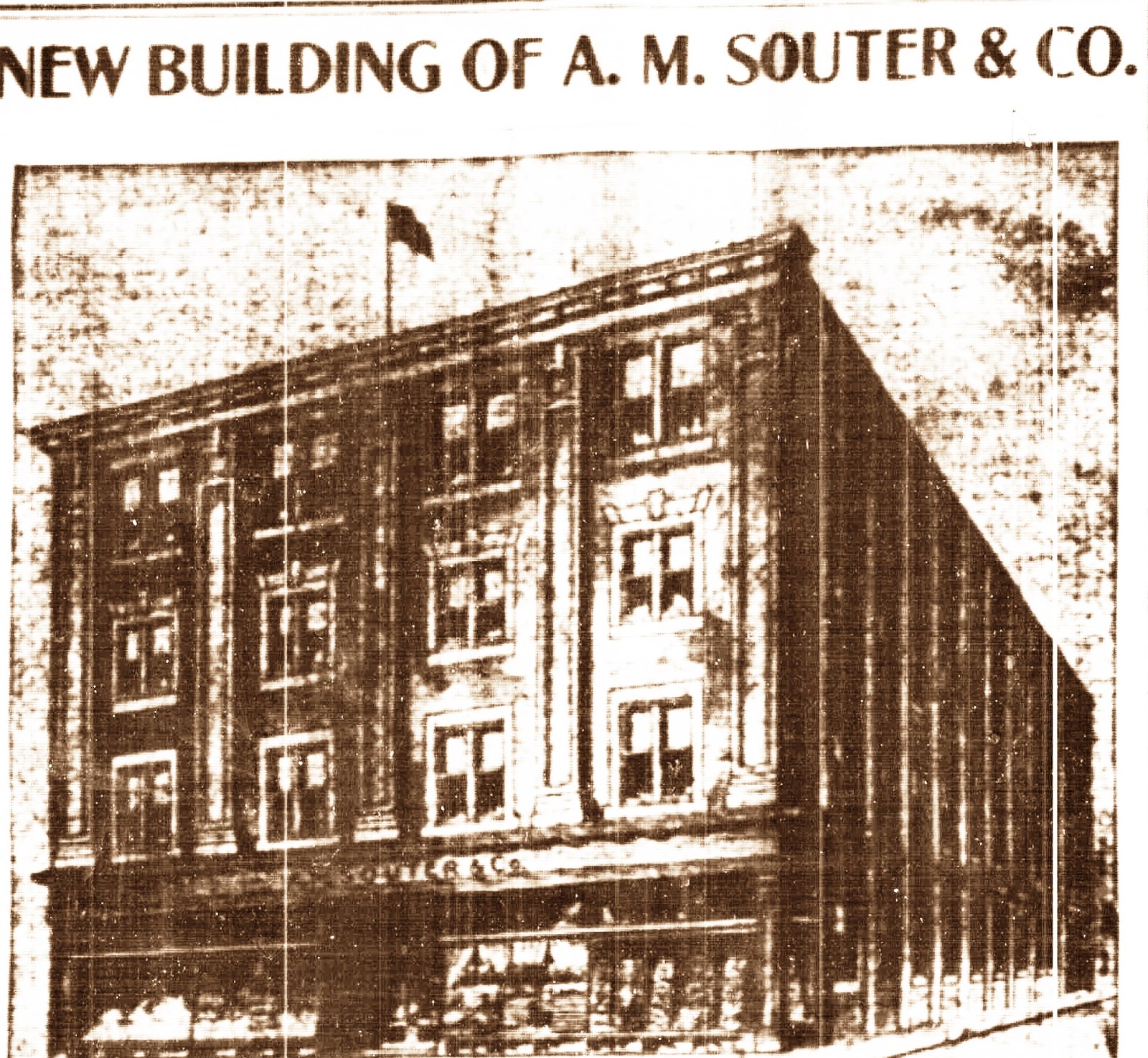
1908 -King and Park Streets


Hamilton Times.    May 02, 1908.

“Another landmark is doomed to disappear in the march of improvement necessary to keep pace with the prosperity of our city. Very few will remember as far back as 1840, when James Reid commenced the furniture business at 91 King street west, but the building in which he successfully built up one of the best furniture and carpet businesses in western Ontario is about to be torn down and give place to a modern store abounding in plate glass fronts for display of goods, so essential to any present day business. Previous to 1840, Mr. Reid had been with Jacques & Hays, of Toronto, and, like many others, saw the possibilities of Hamilton. Many will remember him well, and being a practical cabinetmaker, it was his pride that everything he made should be the best. Anyone attending auction sales held by Tom Burrows, will note that if Tom wishes to draw special attention to any piece of furniture he has under the hammer, he invariably alludes to it as being made by James Reid. Mr. Reid was very particular, and when delivering furniture in the various houses of the city, he would tell his men never mind if their fingers did get the worst of it, so long as they did not injure the polish of the article. In 1876, he found that the store in which he had so long done business was too small to meet the requirements of a growing city, and so he built the fine new store on the corner of King and Park streets, next door to the building he had so long occupied. At the time, the new building was considered the finest retail store in the city. Mr. Reid, being a thorough Scotchman, took particular pride in the stately Scotch granite pillars that adorn the front of the building. The place had quite a novel opening. Some will remember the bachelors’ ball held on the occasion, to which the elite of the city. On the second floor, a room 30 feet by 100 feet, the merry dance was enjoyed by all.

“In February, 1884, James Reid died. It seemed as if the business he so successfully carried on was to come to an end, possibly because of the general depression in trade at the time. For about a year and a half, the executors of the estate kept the store open, and the stock was finally disposed of by auction. The buyers were William Malcolm and A.M. Souter, the former having been bookkeeper for a number of years with Mr. Reid, and the latter, foreman in the cabinet factory. These two men formed a partnership and carried on the business in the same buildings, thinking they had enough room to accommodate the trade for all time to come. In about three years, however, it was found necessary to increase the floor space, and two floors were added to the back of the old store, No. 91. This was thought ample for all purposes, but furniture is very bulky, and requires a lot of floor space for display. It was not long before they felt crowded, and about seven years ago, they bought the premises on the corner of Barton and Elgin streets, known as the Wanzer sewing machine factory.. A limited company was formed, and the product of this factory is acknowledged to be of the best in Canada, both as to design and make. Considerable of the output has been shipped to British and Australian markets, a very large business is done in the Northwest, and their goods are found in every first class furniture store from the Atlantic to the pacific. About six years ago, Mr. Malcolm decided to retire from the retail part of the business, giving his whole attention to the development of the wholesale trade. Mr. Souter, while holding his interests in the wholesale end of the business, enlarged the retail business, and formed a partnership with his younger brother, D.A. Souter and James Davidson, who for the last five years and a half have prospered so well that although they added as a store room, what was formerly what was formerly the factory , a growing city and increased business has forced to remodel the entire store. The new premises, instead of being two buildings, will be one, with over 60 feet of plate glass front. The store will be carried back the full length of the lot, making five floors 60 feet by 145 feet. This will double the present floor space, and the firm has confidence that the public generally appreciates the efforts to carry on the business so well begun by their predecessors. The Times gives pleasure in giving its readers a picture of what the remodeled building will be like, and can assure them that they will find everything they require in the line of home furnishings in this up-to-date store of the enterprising and energetic firm of A.M. Souter & Co.


Saturday, 11 April 2020

1908 - Hamilton Armories


“Soldiers of Hamilton Will Have the Best : Fine New Drill Hall Is Rapidly Nearing Completion – Will Be Ready By August 1 – Something About What Has Been Done – A Great Boom in Military Affairs Is Looked For This Season ”

Hamilton Times.    March 14, 1908

“Although work on the New Drill has been in progress for a year and a half, and the building is rapidly approaching completion, little has been said in the public prints of the interesting work that has been going on. The job is one of the largest of the last few years, and probably no other building, with the possible exception of the uptown skyscrapers, shows in a more marked way the progress of the city. Work was begun towards the close of the summer of 1906, and the job will have taken about two years when completed.

“At the time the 91st regiment was organized in 1903, it was quite evident to the officers of the local regiments that the then Drill Hall would be insufficient to hold both regiments, so the officers took steps to get the Government at Ottawa to provide better. Mr. Adam Zimmerman, M.P. for West Hamilton, was consulted, and became interested in the cause. After some little delay, the Government told him that it would erect a building similar to the Drill Hall. This did not exactly suit him or local officers, and after some maneuvering, the Government expressed its willingness to erect a building similar to the Toronto Armories. This was satisfactory, and the getting out of plans and arranging for work followed.

“Mr. Walter W. Stewart, captain of F Company of the 91st, and a member of the well-known firm of Stewart & Witton, was appointed architect. This was in the latter months of 1905. Mr. Stewart at once started on the drawings and specifications, and they were approved by the Government and the contract was let in August 1906 to Mr. George Webb of this city. A noticeable feature about the building of the new armory is the fact that the work is being done by Hamilton men from start to finish, even to subcontracting.

“The new armory will be for the use of the Thirteenth and Ninety-First Regiments entirely, and will give them ample room for their drills, and other uses they may wish to put it to. The old hall will be occupied by the Fourth Field Battery, the Army Service Corps, the Army Medical Corps and the Corps of guides.

“The new hall while practically the same as the Toronto armory will look larger, on account of the light pressed brick walls. The ceilings will have a high look as curved trusses have been used instead of the straight cord. To give the ordinary person a faint idea of the size of the hall, one can take a line 10 feet inside of the four wall and make an eighth-of-a-mile running track. Around the three sides of the hall is a large commodious gallery cantilevered out from the walls. The seats in this gallery will all be raised in amphitheater form. The hall will be admirably lighted with large windows on the south side and also a large lantern, which runs the entire length of the roof on the under side. The ceiling is made of clear pine and is to be varnished.

“In the basement two large bowling alleys are laid out, one for the sergeants and men and the other for the officers; also a miniature rifle range, 150 feet long, with six targets. The balance of the space left will be divided into kitchens, vaults, etc. The bowling alleys will be a splendid innovation and will be greatly appreciated. There has always been a great lack of provision for the recreation for the men and officers in the present hall, due to the fact that the crowded conditions did not leave any room for the men to have a good time on off nights. What with the shooting gallery and the bowling alley, the new armory will be occupied every night during the winter, and in keeping the men around the place they are bound to take a greater interest in the military affairs than heretofore. The shooting gallery will give the younger men a chance to get a good workout during the winter so that when spring arrives they will be able to give the older shots in the regiment a run for their money.

“On the ground floor where all the drilling will take place, the company armories deserve attention. There will be 16 of these company rooms, for the two regiments, opening off the north side of the main hall. These armories will be fitted up in a way that the members of the local regiments never dreamed of. To begin with, they will nearly double the size of the present armories – 15 x 30 feet. This will give the men of the companies an opportunity of holding their company dinners in their own rooms. A splendid arrangement is to be installed for the stacking of the rifles and other equipment has been arranged for. An entirely new feature will be brought into the company rooms. This will be a clothes closet in each company for all the dress tunics of every member of the company, thus doing away with necessity of having to take all the uniforms home. The tunics will be on a moveable rack that fits in the closet. On the occasion of a dress parade, the rack is moved out into the center of the room, and each man has his own peg. He will take the dress uniform off the peg and put his service tunic in its place. By adopting this method, it is expected, the tunics will be kept  in splendid shape, and will give a good deal more wear.

“A large armory, practically double the size of the company armories, will be given to the Collegiate Cadets, with the same arrangement for the boys’ comfort as the members of the regiment. The Stretcher and Bearer Companies, as well as the Signalers of both regiments will have armories along the James street front, in the wing, between the old and new armories.

“The James street front will be divided into executive departments for the commanding officers and the adjutants of each regiment. The orderly and store rooms will also be one the James street front. The Hughson street front will be utilized for mobilization purposes, and the Maxim gun stores.

“On the second floor, opening off the north side of the main hall, will be too large band rooms for the use of the band of each regiment. These rooms will be 30 x 40 feet, and will be a great improvement on the hall that is being used at present. The bandsmen have always complained that they have not sufficient accommodation, but with the new quarters there will be no ground for complaint. The Bugle Band of each regiment will each have a room 30 x 30, which is twice the size of their present quarters. In addition all this there will be a large room 30 x 100, which is to be used for recreation purposes and lecture room combined. Such a room has been badly needed by both regiments, When any of the prominent officers of the Canadian militia come to the city to give a lecture, in the past, there has been nothing  to offer them in this matter of a good lecture room, that has an attractive appearance, so that this room will fill the requirements.

“The entire second floor on the James street front will be given over to the officers’ quarters of each regiment. Commodious mess rooms, billiard rooms, reading rooms, cloak rooms and lavatories for the officers of each regiment will be provided. These rooms will be finished in quarter-cut oak with beam ceilings. All the rooms will be elaborately furnished, as officers’ quarters should be. It is the opinion of the officers that they should get something in return for the time and money they spend on the militia.

“Men will be employed by each officers’ mess to look after the quarters. They will have living apartments in the towers on James street.

“The sergeants’ quarters for both regiments will be in the towers on the Hughson street front, and they will be handsomely furnished and in keeping with the prosperity of the regiments. The pipers of the 91st Regiment will have a large room over the Cadets’ armory.

“Both regiments are laying by large sums of money for the furnishing of their respective quarters, and when the building is completed and ready for occupancy, it will be the finest in Canada.

“Provisions are being made for the installation of either gas or electricity, and it is an assured fact that the lighting arrangement will be a great deal more satisfactory than it is in the present armory.

“A splendid feature in connection with the heating arrangments is that the heating of the armory will come from a boiler room that it being built between the old and new halls. This will eliminate any danger of fire. The building will be heated throughout by steam, by what is known as the vacuum system. The heating of the main hall will introduce an innovation, the first of its kind in any drill hall in Canada. This part of the armory in the past has never been heated before. What is known as the blast system will be used. The air from the outside is drawn through a large steam coil by means of a big fan, and is forced through ducts into the main hall. By this arrangement the hall will be heated very quickly. If this system proves a success, it is expected that other armories throughout the country will adopt it.

“The armory is built of red pressed brick, with a base of Stanstead grey granite. The stone work, including the cornices and copings, are of Thorold limestone. The building itself, when completed will have a dignified, solid appearance, such as a building of the kind should. It will be, it is claimed, absolutely fireproof and the only thing that could burn in the whole building is the furnishings. The roof over the main hall is of reinforced concrete.

“The burden of looking after the work of the new building has fallen largely on the shoulders of Mr. Walter Stewart, and he is acquitting himself nobly. Mr. Stewart has been subjected to many delays, but he promises that it will be ready by the appointed time – August 1. He has devoted the greater part of his time and energies to the completion of this magnificent structure, and is to be congratulated on the success that has attended his efforts. Another gentleman whose wok calls for special praise is Mr. George Webb, the contractor. He has had a difficult undertaking and no one can complain of the results that he is showing for the time and labor he has expended on it. Col. Logie and Col. Moore have each striven hard to help, and have rendered valuable service.

“What Mr. Adam Zimmerman has done for the military bodies of Hamilton will probably never be fully appreciated. Mr. Zimmerman, however, is not looking for glory. He is quite satisfied to have served the city well in the matter.

“A great boom is looked for in all the corps this spring by reason of the coming opening of the new building.”

Friday, 3 April 2020

1902 - Brennen Fire


“Last night occurred the hottest fire the Hamilton firemen have been up against in many years. The large mill building of the M. Brennen & Sons Lumber company, located in the heart of the city on King William street, were in a little over an hour reduced to a pile of smoldering ruins and adjoining property on all sides was badly scorched.”

Hamilton Spectator.     July 12, 1902.

Just a few hours after Hamilton firemen had worked hard at a bad fire, they were called out again. The Pratt department store on James Street north between King and King William streets was the location of the first fire, the second was just 2 ½ blocks away, on King William Street, between John and Catharine streets.


While the Pratt fire was definitely a serious one, the fire at the Brennen site was much more problematic:

“It was a spectacular fire – one that delighted the soul of the fire-loving fiend to the full. It was a fear-producing fire as well, and had it not been that the night was practically still, with but a breath of wind, it would have been impossible for the firemen to hold it as they did. As it was for blocks to the northeast and all around the immediate vicinity, the roofs of houses, shops and factories were covered with volunteer firefighters beating down the showers of sparks and cinders that were constantly falling and threatening wholesale conflagration on every side.”1

1 “Spectacular Fire at Brennen’s Planing Mill”

Hamilton Spectator  .    July 12, 1902.

The fire alarm for the Brennen fire was sent in during the evening of July 11, 1902:

“A few minutes before 9 o’clock, the alarm was sounded by telephone. At that minute the fire, which started in the rear of the mill at the southeast corner on an upper floor, was a comparatively small affair. But between the time of sending the alarm and the arrival of the King William street apparatus  from less than half a block away, the flames had spread all over the rear part of the mill. The firemen made a heroic attempt to stop the fire where it started, running lines of hose through the stores from King street, and from John and Catharine street ends of the alley, and sending a deluge of water into the blaze. But it was useless. Everything in the mill was dry as tinder. The breeze fanned the flames, and almost in shorter than it takes to tell it, there were holes in the roof and the conflagration had extended through all the floors.”1

The firefighters, under the leadership of Chief Aitchison quickly determined that it was impossible to save the Brennen mill, and turned attention to preventing the fire from spreading:

“Across the road, on King William street, the Gurney-Tilden foundry premises were liable at any moment to become food for the flames, while to the west and south of the burning building were many stores, so close that everything about them blistered and the brickwork became so hot that it meant burned fingers to touch it. While the mill building blazed away, the bulk of the firemen, regulars and volunteers, were busy pouring streams of water on the roofs and walls of these places. It was no child’s play, this battling with fiery devastation. Time and again, with the collapsing of walls or floors in the mill premises would monster columns of lurid flame arise, carrying with it showers of sparks and blazing brands that were forever alighting upon adjacent roofs and starting incipient conflagrations. The heat was so intense that it was almost impossible for the men on the hose to remain at their posts hundreds of yards away from the blaze. But they stuck to it, and had the satisfaction, after nearly two hours of the hardest work, of knowing that they held the hottest fire within recollection to the spot in which it started and with a minimum of damage to the valuable properties immediately adjoining.”1

A particularly dangerous part of the battle waged by the Hamilton firefighters was witnessed by a huge number of people:

“When the floors began to go through in the mill, the firefighters had their most anxious time. The rear portion of the mill has been built but a very short time. It was of heavy construction and contained valuable machinery on all the floors. As floor after floor came down, the noise was terrible. The resounding crashes would immediately be followed by hissing roars as great swirling columns of angry-looking flame rushed heavenward hundreds of feet in the air. With them went the spark showers drifting lazily northeastward and falling everywhere within a distance of five or six blocks. The heat was so intense that the police had no need of ropes to hold the crowd back. It was practically impossible, when the fire was at its height, to approach anywhere within half a block of building without being scorched. But few people wanted to try it, and these were easily handled.”1

There were many factors that led the fire to be witnessed by one of the largest crowds ever to witness a big blaze in the city:

“It is safe to say that more people were at the fire last night than have ever been at a fire in Hamilton before. The hour was early, the presence of the circus accounted for thousands of strangers being in the city. They all went to the fire, and, with the swarm of people who flocked from all parts of the city attracted by the gorgeous reflection, and the crowd let out of the evening circus performance, made up a throng such as the police were never before called upon to handle.

“So great was the reflection that it startled the summer residents at the beach and at Van Wagner’s, and the Radial railway did a rushing business on the 10 o’clock trip to the city bringing up businessmen and others who were afraid that the whole city was going up in smoke. John H. Tilden was a decidedly interested spectator at the fire, and he was a decidedly happy man when, at 11 o’clock, all danger to the Gurney-Tilden buildings were declared to be at an end. The employees of the foundry hurried to the spot as quickly as they learned where the fire was, and during the whole evening they worked on the roofs and in the yard with coats off and arms bared, putting out the incipient fires that were constantly starting. The fact that the foundry roofs are of metal meant much last night in saving the buildings from destruction. As it was they had a decidedly close call. One thing that aided the firemen in preventing a spread of the flames was the fact that practically all the nearby roofs are made of gravel and metal. Had it been a pine shingle district, it would have been impossible to hold the fire at all.”1

The Spectator reporter managed to speak to the night watchman at the Brennen mill to learn able to details about what his experienced:

“It was George Nixon, nightwatchman at the Brennen Mills, who discovered the fire and turned in the alarm. He had been through the mill for the second time during the night, and was at work cleaning up the west end of the top flat when he discovered smoke, and almost before he had time to look up, a puff of smoke, which came through the floor, warned him not only that the building was on fire, but that he was in great danger of being cut off from the only exit, the stairway. Grabbing his lantern, he rushed downstairs at a breakneck speed, and pressed the fire alarm button in the office, there being a special wire from the mill to the fire station. He then hurried outside, but the flames had spread so rapidly that the section of the top story where he had been working was already burning like a fiery furnace, and there was also considerable fire in the west end of the ground floor in the vicinity of the engine room. His first thought was for the twelve horses stabled close to the engine room. It was the work of but a few seconds to break open the stable door, and, with the assistance of a number of volunteers, he succeeded in getting all of the horses out just in time to save them, for it was not more than a couple of minutes before te stable was burning fiercely. In the meantime, the firemen had arrived and started work to fight the flames, but the task was a hopeless one, and that the best they could do was to save the adjoining buildings and piles of lumber in the yard. The offices of the Mississauga and Nipissing Lumber companies, to the west of the Brennen mil were in imminent danger, but the firemen fought the flames back and succeeded in saving them.

“In the opinion of Night watchman Nixon, the fire started in the engine room and shot up the chute which ran from the top flat to the engine room and through which the shavings  and saw dust were sent down to a large dust bin, and from there transferred to the furnaces. But even Nixon is at a loss to know how the fire made such a headway before it was discovered. Less than half an hour before he first discovered smoke, he went through the engine room and saw no evidence of anything being wrong. Had he remained on the top flat two minutes longer, he would undoubtedly have perished in the flames as his only means of escape would have been cut off.”1

The fire fighters, led by the chief did hard work, with the assistance of many volunteers:

“When the floors began to fall, the walls commenced to bulge, and many of the spectators expected to see them collapse at any minute. Chief Aitchison instructed his men to keep one eye on them, and warned them not to expose themselves to unnecessary danger. Large sections of the eastern, southern and western walls did fall in, but fortunately no person was hurt. Many of the men, exhausted after their hard fight at the Pratt fire, were overcome by the heat, but they all stuck to their work until the danger point was passed. The entire department deserves the highest credit for the work done in saving adjacent buildings. Had it not been for the good work of practically every man, the Hope building and office buildings on King William street would surely have gone up in smoke. Again the department received valuable assistance from a large staff of volunteers, the majority of whom gained much experience at the Pratt fire.

“What little breeze there was came from the southwest, and not only did it fan the flames, but it swept millions of sparks and cinders over the Gurney-Tilden foundry and houses and other buildings on Rebecca and Catharine streets. Everybody who had a garden hose put it into service, and by keeping the roofs of the buildings constantly soaked prevented them from becoming ignited. The pressure was again as good as could be desired, eighteen good solid streams being played on the fire and numberless smaller streams being used to keep other buildings in the vicinity from catching fire. The big engine was kept in readiness, but it was not required, there being sufficient pressure to throw the water into the third story windows.”1

The Spectator carried an article on the aftermath of the Brennen fire. It was learned that the company’s loss would be extremely heavy as there was not enough fire insurance taken out to cover even a quarter of the financial loss. Fire insurance providers were reluctant to take cover planning mills and the premeiums required were prohibitively high.

The members of the Hamilton Fire department came in for high praise for the work they had done:

“Chief Aitchison should now have renewed confidence in himself. For years he has had an idea that when the Brennen mill caught fire, which he was sure it would do, it would mean wholesale destruction of property in all directions. He looked for this, and prophesied it. Thanks to the right sort of weather conditions, which the chief would call a fluke of nature, he has been proven to be a bad prophet. The comment of the public generally today is that it was a miracle that the firemen held the blaze to the mill property, even practically saving the dwelling house to the east of it.

“Firemen were kept busy pouring water on the smoldering ruins all morning. The walls were very shaky, and Building Inspector Anderson had King William street and the alley at the rear of the burned building fenced off.

“When the fire was at its height word was received that fire had broken out again in the Pratt building. Foreman Broadbent and half a dozen men were sent to attend to it. They located the fire in the top story, near the front of the building. A pile of cotton was blazing and the firemen threw it out into the street. Very little additional damage was done.” 1


“Chief Aitchison should now have renewed confidence in himself. For years he has had an idea that when the Brennen mill caught fire, which he was sure it would do, it would mean wholesale destruction of property in all directions. He looked for this, and prophesied it. Thanks to the right sort of weather conditions, which the chief would call a fluke of nature, he has been proven to be a bad prophet. The comment of the public generally today is that it was a miracle that the firemen held the blaze to the mill property, even practically saving the dwelling house to the east of it.

“Firemen were kept busy pouring water on the smoldering ruins all morning. The walls were very shaky, and Building Inspector Anderson had King William street and the alley at the rear of the burned building fenced off.

“When the fire was at its height word was received that fire had broken out again in the Pratt building. Foreman Broadbent and half a dozen men were sent to attend to it. They located the fire in the top story, near the front of the building. A pile of cotton was blazing and the firemen threw it out into the street. Very little additional damage was done.” 


Friday, 20 March 2020

1900 - Wilfrid Laurier Comes to Hamilton


“Hamilton’s Reception to Sir Wilfrid Laurier on Monday promises to be one of the greatest demonstrations in the history of the city.”
Hamilton Times.   November 02, 1900.

The 1900 federal election campaign was winding down. Premier Wilfrid Laurier would be on a campaign swing through southern Ontario, and it was suggested that Monday November 5, 1900 would be the day that he would come to Hamilton. That was the same day that Hamilton soldiers returning from service in the Boer War were expected to arrive home. After some negotiation it was determined that Laurier’s schedule was hard to change, particularly as the election was just days away. The soldiers would be held back and entertained elsewhere before coming home to a large Welcome Home demonstration.
The appearance of the Prime Minister also called for a public welcome. The Hamilton Times, a strong supporter of the Liberal party touted the proposed Laurier Demonstration as being “one of the greatest demonstrations in the history of the city” while the Spectator, decidedly not a pro-Liberal newspaper said very little about Laurier.
On November 5, 1900, the afternoon edition of the Times which hit the street just hours before the premier’s arrival gave details as to where he would be speaking and what the route of the street procession would be:
“Those who cannot get into either Hall will be able to show their enthusiasm in the procession which will escort Sir Wilfrid from the Grand Trunk Railway station. The Committee’s arrangements are complete in every particular, and the sight will be well-worth seeing.”1
1“The Premier Tonight”
Hamilton Times November 5, 1900.
To honor Laurier, Hugh Murray, Hamilton’s unofficial poet laureate, was moved to pen the following :

A Welcome to Sir Wilfrid
          Welcome illustrious Laurier, lit
          Bright with wisdom and with wit;
          On whose shining shoulders sit
                   Kingly style and station,
          Welcome one supremely fit
                   To rule our noble nation!

          Welcome to fair Hamilton;
          Where, though still we see the sun,
          Countless industries have won
                   World-wide reputation;
          Where our royal race we run,
                   Free from tribulation!

Welcome, with that silvery tongue
Which magnetizes old and young,
To sow and manifest among
          Our peerless population
Those great triumphant truths you’ve rung
          Over all creation.

Welcome even to convert,
Unbelievers from inert,
Dead indifference to alert
          Life and conversation
Giving every head and heart
          A Liberal education.
-      William Murray
The Times account of Laurier’s presence in Hamilton, published the morning after the event was glowing in its description:


“If anybody had any doubts as to the Liberals of Hamilton being very much alive this campaign, he probably had the idea dispelled by the great gatherings to greet Hon. Sir Wilfrid and that able lieutenant Hon. Mr. Murlock last night. The demonstration quite eclipsed anything of a like nature ever before attempted in the city, and will not probably soon be equaled. The attendance and enthusiasm were indicative of  the spirit of the Liberals in the contest, and must have been highly gratifying to the honored guests.
“The storm of the early evening had blown over by the time that the Premier’s party arrived, and the night was most propitious. Everything ended pleasantly, and even the many ladies who were in the crush will hardly regret the experience.
“The managers of the great double meeting had made careful arrangements for order and comfort, and as far as was possible under the conditions produced by such enormous crowds, they succeeded admirably.
                   Magnificent Demonstration
                             ____________
                   The Streets a Blaze of Lights
                  And the Air Filled With Jubilation
“As early as 6:30 the vicinity of the Liberal headquarters at the corner of King and Catharine streets presented a lively appearance, and as the minutes sped, the crowd of workers increased, mounted men rode here and there with orders, and carriage after carriage lined up in readiness for the formation of the big procession that was to show that Hamilton could give a royal welcome to the Liberal leader. After the procession started for the Stuart street depot, many a belated carriage and humanity-laden dray cut in from the side streets to swell the parade. From the loyal old lake district came wagon after wagon filled with the sons of toil, bent on showing in no uncertain way their eagerness to join in the general jubilation.
“When the train bearing the Premier and his party pulled into the Stuart street depot from the east at 7:20, Hon. J.M. Gibson, Messrs. A.T. Wood, John Stuart and Adam Zimmerman boarded it. Sir Wilfrid Laurier was just finishing his dinner in the dining car, and he was not disturbed.
                   The Procession
“It was nearly 7:35 when the procession left the Stuart street depot in a blaze of fireworks, headed by fifty mounted men closely followed by a band of torchbearers. Then came the Thirteenth Regiment band and a mounted guard of honor for the illuminated carriages containing the Premier and Hon. Wm. Mulack. (Details re names of men in parade, very brief description of some of participants ‘the Longshoremen’s Union, with a gaily-decorated boat and the occupants wearing white plug hats.)
                   Along the Route
“As the procession, a mass of humanity and fire, moved up Stuart street, it was greeted by cheers from the crowds which lined the sidewalks and a pandemonium from the fish horns and whistles. Turning into James street, the route lay along that crowded thoroughfare to the Market Square, to Macnab street, to Main street, to Catharine street, to James street, to the Drill hall. Along the line of march were thousands and thousands of cheering citizens; and at the City Hall, the crowd was dense  and the cheering at this point when the Premier passed was deafening. In front of Irwin’s shop on Macnab street, a barrel of tar was on the fire, and this ignited on of the drays in the procession, adding to the excitement. In front of the Post Office, a wagon loaded with candles and rockets, took fire and caused a big blaze and more excitement. Several cases of candles were on the wagon, and those took fire, and the load was dumped off, causing a conflagration near the Macdonald monument, which would have caused perspiration to roll from poor old Sir John had he been in the flesh, instead of bronze. The fire department was called to extinguish the blaze.
“Along the line of march, the varicolored lights from thousands of Roman candles, the glare of electric, and the moving chains of torches, surmounting the black mass of the procession, and the vast multitudes that surged along the sidewalks, presented a picture as exhilarating as it was grand.
                             At the Drill Hall
                                 ________
             Half the City Seemed to Want to Get in
“From the close of the storm, before six o’clock, crowds began to gather in the street in front of the Drill Hall and long before the doors opened at 7 o’clock a solid mass of thousands, among which were many ladies, packed the street and endured the discomforts of such a crush as is not often experienced. When the doors were opened, the jam was terrific, and despite the efforts of two or three policemen within to clear away the crowd at the entry, it looked as if serious injury would result to some of the ladies. The hall rapidly filled, until not another could not be accommodated, and there was a liberal sprinkling of the fair sex, showing how bravely they endured the wait and the crowding to hear Canada’s First Minister and most eloquent son.
“The four boxes were occupied by ladies, and the galleries were filled almost entirely by ladies.
                   The Decorations
“The Drill Hall had been specially decorated for the occasion, and it looked bright with flags, bunting and mottoes.
“Among the mottoes were –
          ‘Laurier, the True Canadian.’
          ‘From Halifax to Vancouver, We Are Sir Wilfrid’s Men.’
          ‘Five More Years of Busy Factories.’
          ‘Mulock, the Man Who Gave Us Penny Postage.’
          ‘Canada Above All and Always ‘ – Sir Wilfrid Laurier.
          ‘The Deice that I Give You is ‘Union, Peace, Friendship and Fraternity.’
          ‘See the Conquering Hero Comes.’
          ‘No smokeless chimneys in our town since Laurier cut the taxes down.’
          “The rear of the platform  was prettily draped with British flags and the military colors; a picture of Her Most Gracious Majesty formed the centerpiece. At each corner of the platform, tables laden with palms and flowers were placed, the whole forming a beautiful scene.
                             On the Platform
          “Lengthy list of persons on the stage not followed not copied)
                             The Premier’s Arrival
                             __________________
                   The Signal for Cheers Upon Cheers
                               And Waving of Hats
“When Sir Wilfrid Laurier, the Premier of the Dominion, entered the Drill Hall by the east door, the scene was one to be remembered. The people rose as one man – the ladies included – and the large hall fairly shook with the shouts and cheers that rent the atmosphere. Men hurrahed and waved their hats, and the ladies clapped their hands and waved their handkerchiefs, fish horns touted and above all was heard the band posted in the south gallery, playing ‘The Conquering Hero’ and ‘God Save the Queen.’ The wild tumult continued until the Premier and his party reached the platform, and for some five or ten minutes after the platform was reached, Sir Wilfrid bowing and smiling amid the cheering. He would have been more than human had such a demonstration not touched his heart, and certain it is the Premier took it as an omen of victory. Leading the little procession to the platform was Mr. W.H. Nichol, of King street east, bearing aloft a large Union Jack, which he proudly carried on the platform, waving it the while. And it was the flag and nothing but the flag. Certainly it was not Mr. Bruce’s yellow flag.”2
2 “Hamilton Does Homage to Canada’s Premier : Magnificent Demonstration in Honor of Sir Wilfrid Laurier Last Night : Great Meetings Addressed By Him : And By Hon. Wm. Mulock, Postmaster-General and Minster of Labor – Six to Eight Thousand People Hear the Speeches – Great Crowds Meet Sir Wilfrid and Accompany Him on a Triumphal Trip Around the City With Bands, Fireworks and Illumination – Speeches By Some of the Leading Local Liberals and Some Excellent Speakers From Other Parts”
Hamilton Times.    November 06, 1900  

 
Needless to say, the tone of the Spectator coverage of the Laurier appearance in Hamilton was decidedly different in tone:
“The Laurier mass meeting is now a thing of the past, and the managers of local Grit affairs are wishing it had never happened. From the beginning of the procession, which was about as third rate as a procession could well be without being a disorganized mob of boys, to the unsatisfactory speech of the premier, which was not even as eloquent as his admirers had been looking for, the affair was disappointing. Liberal-Conservatives of the city are very well satisfied that the premier came, and that the local Grit organization displayed its strength in the reception tendered to him on his arrival. What the Grit workers have been complaining about all through the campaign has now been made visibly apparent. So apathetic are the supporters of the Laurier-Tate government in Hamilton, it is impossible to get workers even to carry torches and cheer in a reception to the premier and leader of the alleged strongest government Canada has ever seen. This isn’t the way it will be summed up in the Times tonight, but it is the way the men on the streets, both Reform, Conservative and Independent are talking about it.”2
2“It Was a Fizzle : Laurier Procession and Reception Most Disappointing to the Friends of the Premier : Government Supporters Too Apathetic to Even Carry Torches and Cheer Their Leader : Political Gossip of a General Sort – Conservatives in the Fight Confident of Victory ”
Hamilton Spectator.    November 06, 1900.
Wilfrid Laurier and his Liberal party were the winners of the 1900 election, but, in Hamilton, both Conservatives were elected as Members of Parliament.